
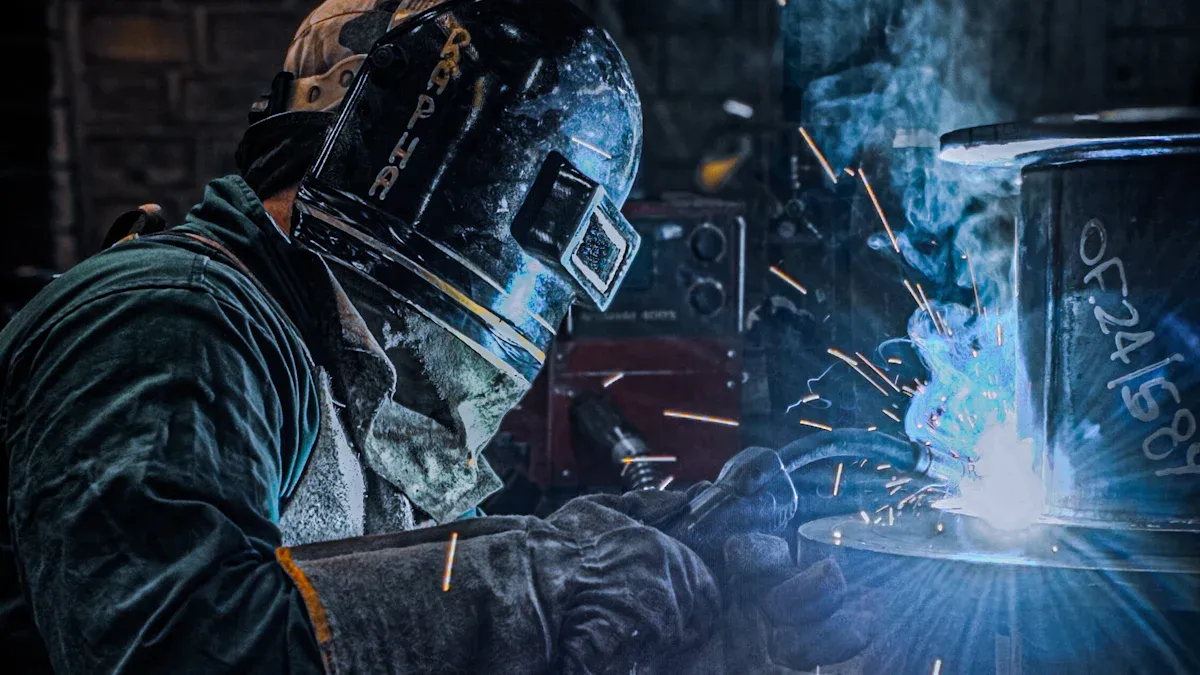
We know selecting the right welding helmet is crucial for your safety and work efficiency. Proper eye protection prevents an estimated 90% of eye injuries. This guide helps you identify essential features for optimal helmet for welder protection and performance, ensuring you make an informed decision for your specific welding requirements.
Key Takeaways
- Choose a welding helmet that fits well. A good fit keeps you safe and comfortable. It stops neck pain and helps you work better.
- Look for a helmet with a clear and wide view. This helps you see your work better. It makes your welds more accurate and reduces eye strain.
- Always pick a helmet with good safety ratings. Certifications like ANSI Z87.1 mean the helmet protects your eyes and face well. This keeps you safe from sparks and bright light.
Core Features for Welder Protection and Comfort
Headgear Fit and Adjustability
I know a welding helmet is more than just a shield; it is an extension of your body. A proper fit is paramount for both safety and comfort during long welding sessions. I find that a well-fitting headgear significantly reduces neck strain and fatigue. This makes me more inclined to wear my helmet consistently. This increased acceptance of safety gear minimizes my exposure to hazards. It leads to a more comfortable and productive workday. I know a well-fitting helmet for welder protection is crucial.
Ergonomic headgear prevents musculoskeletal injuries in the neck and back. This is especially true when compared to poorly designed helmets or poor welding posture. Features like a flexible, ergonomic design and comfort cushions contribute to maximum comfort for all-day wear. For extended welding sessions, an ultra-lightweight frame with ergonomic headgear is beneficial for my head, neck, and shoulders. Helmets that are lighter, cooler, and less cumbersome help prevent injuries and maintain high productivity. All-day comfort, supported by premium padding and suspension systems, relieves pressure points and reduces muscle strain. This prevents the helmet from feeling front-heavy. Features like shock-absorption, sweat-wicking liners, and extra cushions allow me to work without distraction.
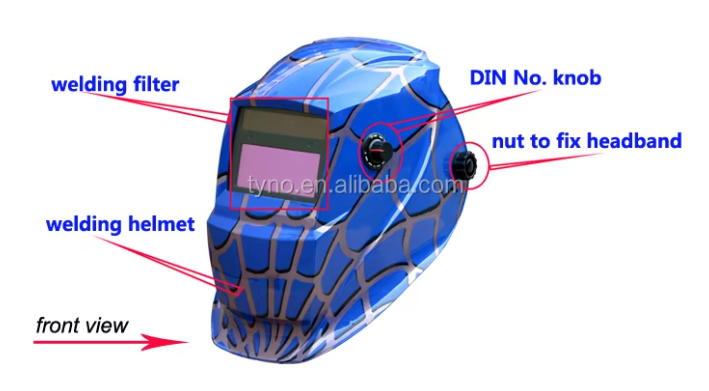
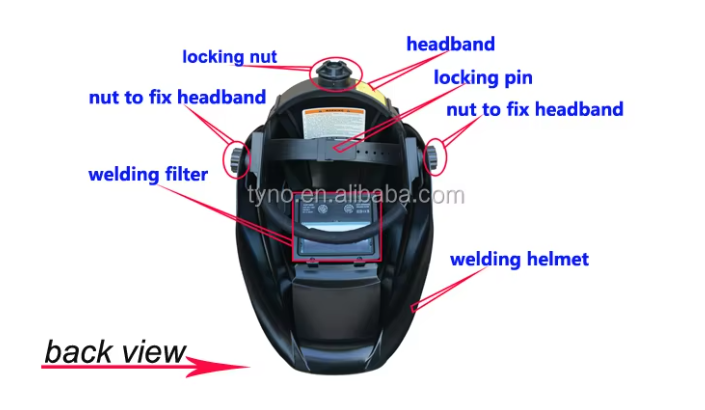
I look for specific adjustment mechanisms. Ratchet-style adjustments allow for quick sizing changes, even when I wear gloves. Multiple adjustment points provide a custom fit. They help distribute weight evenly across my head. Tilt and forward-backward adjustments offer optimal viewing angles. These contribute to good posture and reduced neck strain. Some advanced systems, like TynoWeld headgear, offer a customizable ergonomic fit with four distinct positions. They have a precise adjustable liner system with quick release and 360° contact with wide surface pads. This provides unparalleled personalized comfort. It distributes pressure evenly, eliminating hot spots. This ensures consistent and even tension, preventing helmet wobble. This comprehensive cushioning and support enhances overall helmet stability.
Helmet Weight and Balance
I understand that a helmet’s weight significantly impacts my comfort, especially during prolonged use. This is a key aspect of effective helmet for welder protection. Wearing an unstable hood places unnecessary pressure on my neck. This leads to discomfort or fatigue over time. Lightweight helmets reduce strain on my neck and shoulders. Good balance, achieved through features like a lightweight design, padded headgear, and adjustable straps, reduces fatigue.
I consider how the helmet distributes its weight. Newer respiratory helmets, for example, are designed to distribute weight. Their respiratory components act as a counterbalance to the front-heavy lens. This minimizes neck strain. Improved helmet designs include more points of contact for a more comfortable fit and better weight distribution. Features like an adjustable top head support, a rotatable front headband, a strategically positioned rear headband, an orientation adjustment pin, and forward and backward adjustments are designed to distribute weight, reduce pressure, and optimize balance.
When I choose a helmet, I balance the viewing area with the overall weight.
| Feature | Importance | Consideration |
|---|---|---|
| View Area | Larger view areas enhance visibility and precision. | I balance this with the overall weight of the helmet. |
| Weight and Comfort | Lightweight helmets reduce neck and shoulder strain. | Padded headgear and adjustable straps improve comfort. |
Material Durability and Heat Resistance
The material of my welding helmet is critical for my long-term safety. I need a helmet that withstands the harsh welding environment. This includes sparks, spatter, and radiant heat. High-density polyethylene and fiberglass are common materials. They offer excellent durability and resistance to high impacts and heat.
I always check for industry certifications. These ensure the helmet meets rigorous safety requirements. In the United States, ANSI/ISEA Z87.1 is the applicable standard. It ensures helmets withstand high-velocity impacts from flying debris. In Canada, CAN/CSA Z94.3 regulates welding helmet safety, covering impact resistance. For Europe, EN 175 governs protective equipment for welding. It focuses on durability and impact resistance. Helmets must protect against both top and side impacts. ISO 10862 sets global guidelines for welding helmet safety. It ensures protection against physical impacts.
I also look for specific impact protection types. Type I provides protection from top impacts. Type II offers both top and lateral impact protection. This comprehensive protection is essential for my safety. This ensures my helmet for welder protection performs when I need it most.
Optimizing Your View: Advanced Lens Technology
Viewing Area Size and Clarity
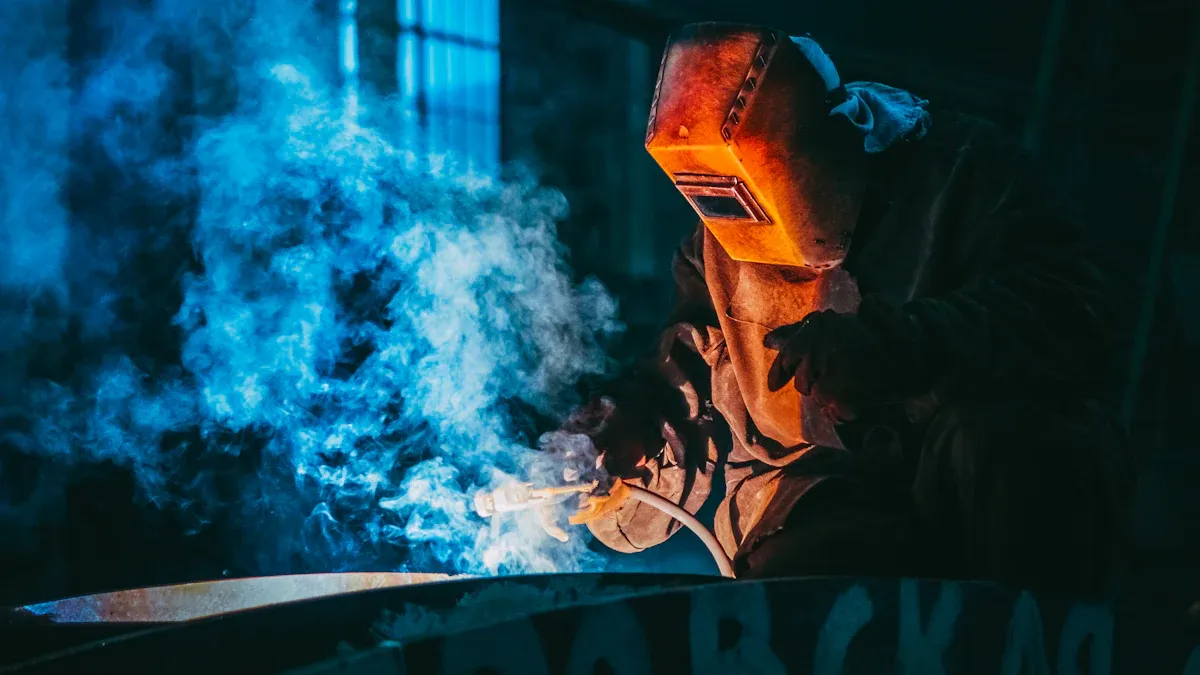
I know a clear and expansive view of my work is essential for precision and safety. The size and clarity of my welding helmet’s viewing area directly impact my ability to perform high-quality welds. I find that a larger lens offers enhanced visibility. It provides a wider peripheral view and a clearer perspective of the work environment. This extended field of vision makes it easier for me to track the welding arc and pool. This leads to higher precision and the ability to catch flaws. A larger viewing area is particularly advantageous for overhead welding. It allows me to shift my gaze without repositioning my entire body. This maintains stability and control. In confined spaces, a larger pane reduces neck strain. It allows eye movement instead of head movement. It also provides a wider peripheral view. This helps me avoid potential hazards and improves overall convenience, comfort, and control.
I consider the optimal viewing area dimensions for different welding applications:
| Size | Approximate Viewing Area | Application | Reason To Choose |
|---|---|---|---|
| Small | 6 square inches or less (e.g., 3.5″ x 1.75″) | Budget or entry-level tasks | Ideal for simpler tasks where detailed visibility isn’t critical, or when the welder can stay in a stationary position. |
| Medium | 7 to 9 square inches (e.g., 3.93″ x 2.36″) | Mid-range welding | Offers a solid balance between cost and clarity, suited for welders needing a moderate field of view. |
| Large | 9 square inches or more (up to 4″ x 4″) | Professional or higher-end projects | Excellent for more complex or extensive projects, allowing welders to monitor their workspace and welds with ease. |
When I choose a viewing area, I consider several factors:
- Experience Level: While smaller viewing areas suffice for beginners, a larger lens aids learning and practice. It offers better control, alignment, and precision. Seasoned professionals also benefit from wider views.
- Type of Welding Application: I choose a field of view based on specific applications. For instance, a larger viewing pane, like that of the TN360-ADF9120, is highly beneficial for overhead welding due to improved visibility.
- Welding Environment: For frequent work in tight spaces or out-of-position, a larger viewing pane, such as the TN350-ADF9100, enhances comfort and adaptability.
- Budget: Helmets with larger lenses generally cost more. Investing in a high-quality helmet with a large viewing area can be a valuable long-term decision for my welding career.
- Personal Preferences: Viewing size can be subjective. Some experienced welders prefer a standard 2×4 lens, while others opt for panoramic views like the TN15-ADF8610.
The optical clarity of a helmet is crucial for my vision. It directly impacts my productivity and the quality of my work. Viewing welds through a clearer, higher-quality lens allows me to work longer with less eye fatigue and overall physical strain. Being able to clearly perceive subtle variations in the arc and weld puddle enables more accurate results and higher-quality welds. Conversely, a helmet that is too dark or has inconsistent sight quality can cause discomfort, vision problems, and lead to irregular welds.
Excellent optical clarity in a welding helmet directly contributes to better welds. It allows me to see clearly. Poor clarity, however, can lead to distorted vision. This causes eye strain and negatively impacts the precision of my work and productivity. Distortion specifically hinders my ability to see fine details. These are critical for accurate welding tasks. Helmets with high clarity ratings offer superior visibility in both light and dark conditions. This gives me better control over my work and minimizes errors and the need for rework.
An optical clarity rating of 1/1/1/1, such as the EN 379 standard, significantly enhances my vision and accuracy. It provides uniform shade levels across the entire viewing area and reduces bright light. This allows me to perceive subtle changes in the arc and weld puddle more clearly. This is crucial for making precise adjustments to angle and travel speeds. The improved clarity directly leads to more accurate results and higher-quality welds. I find that welders using 1/1/1/1-rated helmets report a clearer view of the workpiece and the arc without distortion. Lower-rated lenses can cause clarity issues. This superior clarity also reduces eye strain. It allows me to work longer and more comfortably, thereby boosting productivity.
Auto-Darkening Filter (ADF) Performance

I rely on Auto-Darkening Filters (ADFs) for instant protection. The lens of an auto-darkening helmet can darken very quickly, usually within 1/25,000 of a second. This fast reaction time, combined with continuous UV/IR protection even in the inactive state, is vital for safeguarding my eyes from harmful radiation. Auto-darkening filters typically transition from a lighter to a darker shade within milliseconds of a welding arc being struck. This rapid response is crucial for protecting my eyes from intense UV and IR light. It prevents potential damage and temporary blindness. It also ensures continuous safety and visibility throughout the welding process.
Shade Range and Arc Sensors
I need a helmet with a versatile shade range to accommodate different welding processes and amperages. The appropriate shade level is critical for my eye protection and clear vision.
Here is a guide for recommended shade numbers for common welding processes:
| Welding Process | Arc Current (Amps) | ANSI and AWS Shade No. |
|---|---|---|
| MIG (GMAW) | Less than 60 | – |
| MIG (GMAW) | 60 to 160 | 11 |
| MIG (GMAW) | 160 to 250 | 12 |
| MIG (GMAW) | 250 to 500 | 14 |
| TIG (GTAW) | Less than 50 | 10 |
| TIG (GTAW) | 50 to 150 | 12 |
| TIG (GTAW) | 150 to 500 | 14 |
I also consider specific recommendations for different welding types:
- MIG Welding (GMAW/FCAW):
- Shade 10 for low-current (up to 100 amps) on thin materials.
- Shade 11 for moderate-current (100-175 amps).
- Shades 12-14 for high-current (175-300 amps).
- TIG Welding (GTAW):
- Shades 10-14, with lighter shades for lower currents/thinner materials and darker shades for higher currents/thicker materials.
- Stick Welding (SMAW):
- Shade 10 for low-current (up to 75 amps).
- Shade 11 for moderate-current (75-200 amps).
- Shades 12-14 for high-current (200-400 amps).
For MIG welding, a shade range of 10 to 13 is generally advisable. For TIG welding, DIN levels of 8 or higher are recommended. The specific shade depends on the arc length.
The number of arc sensors also matters. More sensors provide better coverage and prevent accidental flashes, especially when my view of the arc is partially obstructed. I look for helmets with at least two sensors, but four sensors offer superior reliability.
Power Source and Battery Life
I need a reliable power source for my auto-darkening filter. Most ADF helmets use a combination of solar cells and replaceable batteries. Solar cells continuously charge the internal battery, extending its life. Replaceable batteries ensure the helmet functions even in low-light conditions or when the solar cell cannot fully charge. I always check the battery type and availability.
Here are typical battery life expectations for auto-darkening welding helmets:
| Power Source Type | Usage/Condition | Typical Battery Life Expectation |
|---|---|---|
| Regular Battery (daily use, extensive welding) | High usage | 3 to 4 months (based on practical estimate) |
| Solar-powered | Constant trickle charge from sunlight/UV light | Several years |
| General (depending on quality and usage) | Varied | 3 months to 3 years |
I prioritize a helmet with a long battery life and easily accessible replacement batteries. This ensures consistent helmet for welder protection and avoids interruptions during my work.
Enhancing Performance and Meeting Standards
Magnification Lens Compatibility
I find magnification lenses essential for precision. They simplify detailed welding, especially if I use bifocals or need visual assistance. These lenses offer strengths from 0.75 to 2.50, available in various increments. I can use them as replacement lenses, gaining protection, clarity, and magnification. This feature greatly enhances my accuracy.
Anti-Fogging and Grind Mode
Maintaining clear vision is critical. Anti-fogging technology ensures I always see my work. Ventilation systems, with integrated channels or powered airflow, circulate fresh air. This regulates temperature and reduces humidity, preventing condensation. Some systems connect to external air-purifying units. Anti-fog lens coatings also help. They create a hydrophilic surface that disperses condensation into a thin, invisible layer. This prevents obstructive droplets. Grind mode is another vital feature. It lets me switch the lens to a clear state for grinding without removing the helmet.
Industry Certifications (e.g., ANSI Z87.1)
I always prioritize industry certifications. They confirm my helmet meets rigorous safety standards. ANSI Z87.1 is crucial in the US. It ensures resistance to impacts, meaning the helmet shell and lenses withstand flying debris. Z87.1+ includes stricter tests for high-speed impacts. Optical clarity standards guarantee a sharp, undistorted view, reducing eye strain. The helmet must provide full face coverage. It needs a snug fit to prevent sparks and dust entry. Lenses must block harmful UV and IR rays. The certification also tests for chemical splash resistance. OSHA mandates safety welding helmets for protection. The EU Directive also requires strict safety standards for welding helmets. This ensures my helmet for welder protection is reliable.
I now provide my final checklist for your confident welding helmet purchase. I empower your decision for long-term safety and performance. Investing in the right helmet for your craft offers immense value. It ensures protection, comfort, and precision in every weld.
FAQ
How often should I replace my welding helmet?
I replace my helmet when I see cracks or damage. I also replace the ADF lens if it shows scratches or malfunctions. This ensures my continuous protection.
Can I use a welding helmet for other tasks like grinding?
Yes, I use helmets with a “grind mode.” This feature lets me switch the lens to a clear state. I can then grind safely without removing my helmet.
What is the most important feature to consider for a beginner?
For beginners, I prioritize an auto-darkening filter with a 1/1/1/1 optical clarity rating. This provides clear vision and crucial eye protection.
Post time: Oct-27-2025