
What Lens Shade is Needed for Welding?
A Comprehensive Guide to Welding Lens Shade Selection
Welding is a critical process in numerous industries, from construction and automotive to shipbuilding and manufacturing. However, it’s also a process that exposes workers to intense light, ultraviolet (UV), and infrared (IR) radiation—all of which can cause severe eye damage if not properly protected. The most essential line of defense for a welder’s eyes is the welding helmet lens, and more specifically, its shade.
But what lens shade is needed for welding? Is there a universal answer, or does it depend on the process, amperage, and personal preference? In this blog, we will explore the importance of lens shade, international safety standards, how to select the right shade for different welding tasks, and the latest innovations in auto-darkening filter (ADF) technology.
Why Welding Lens Shade Matters
The lens shade in a welding helmet determines how much visible light, as well as dangerous UV and IR radiation, is filtered out before reaching the welder’s eyes. Inadequate protection can cause a condition known as “arc eye” or “welder’s flash”—a painful inflammation of the cornea caused by intense light exposure. Prolonged exposure without proper shade can lead to permanent eye damage or even blindness.

An appropriate lens shade offers two main benefits:
- Safety: It blocks harmful light and radiation, protecting the eyes from burns and long-term injury.
- Visibility: It provides enough clarity for welders to see the workpiece and weld pool, ensuring accuracy and quality while reducing eye strain.
Understanding Lens Shade Numbers
Welding lens shades are rated by numbers, typically ranging from Shade 4 (lightest) to Shade 14 (darkest). The higher the number, the darker the lens and the less light passes through. Lower numbers are suitable for light-duty tasks (such as torch brazing or plasma cutting), while higher numbers are needed for high-amperage welding.
Common Shade Ranges:
- Shade 4: Very light, used for torch soldering or as the lightest setting on auto-darkening helmets.
- Shade 5-8: Ideal for low-amperage welding, cutting, or grinding.
- Shade 9-13: Standard for most arc welding operations.
- Shade 14: Used for very high-amperage welding or special industrial applications.
International Standards for Welding Lenses
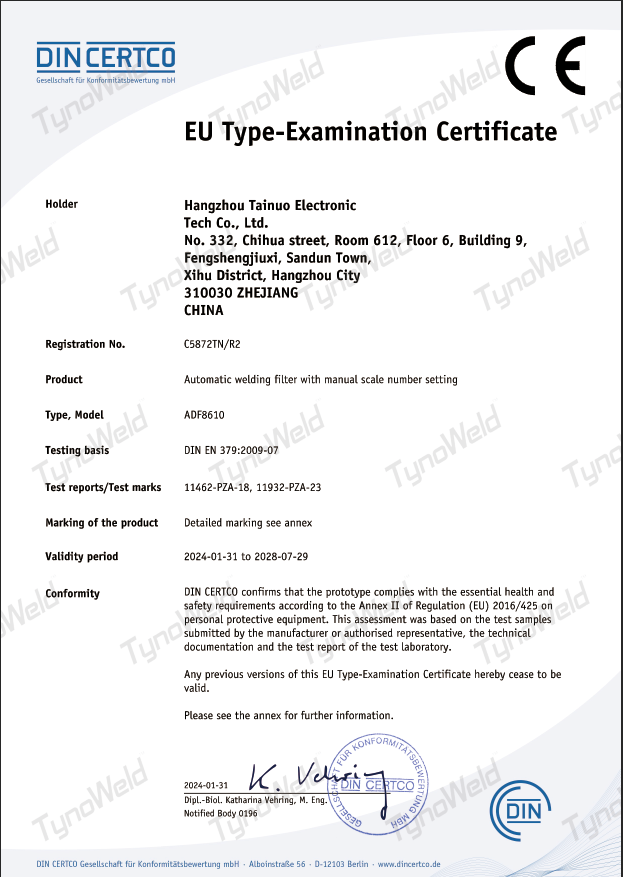
To ensure welders are adequately protected, several international organizations have established standards for welding lens shades. The most recognized is the DIN (Deutsches Institut für Normung) system, commonly used in Europe and referenced worldwide.
- DIN Standard: Lenses are rated by DIN shade numbers; higher numbers mean greater protection.
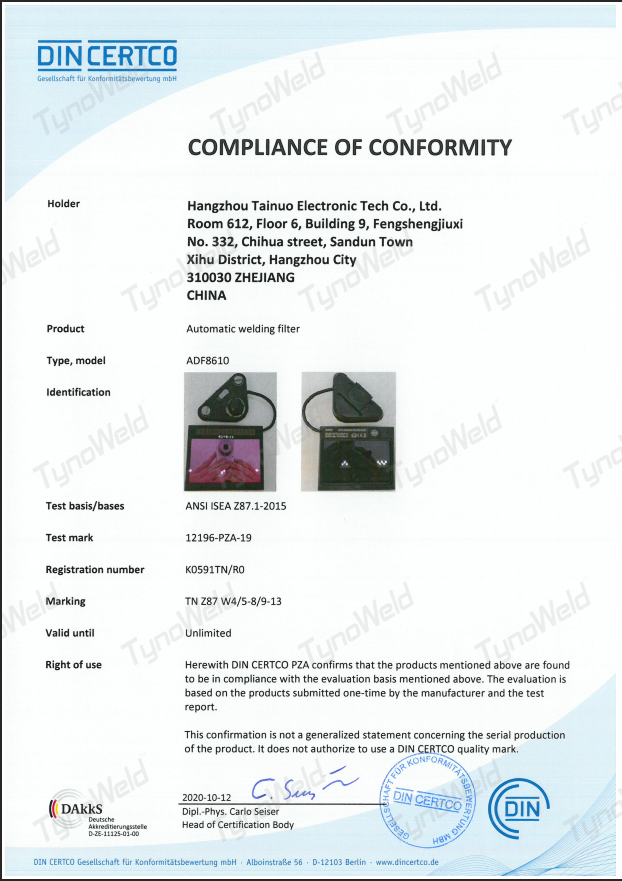
- ANSI Z87.1 (USA): Requires welding helmets to block 99.9% of UV and IR, regardless of shade level.
Modern auto-darkening welding helmets often display both DIN and ANSI standards, giving users assurance of adequate safety.
How to Choose the Right Lens Shade for Welding
The correct lens shade depends on several factors:
- Welding Process (MIG, TIG, Stick, Plasma, etc.)
- Welding Amperage
- Material Being Welded
- Personal Sensitivity to Light
1. Shade Recommendations by Welding Process & Amperage
Below is a general guideline (based on ANSI and DIN standards) for selecting lens shade according to welding process and amperage:
| Welding Process | Amperage (A) | Suggested Shade Number |
|---|---|---|
| Shielded Metal Arc (SMAW/Stick) | 20-40 | 7 |
| 40-60 | 8 | |
| 60-100 | 10 | |
| 100-150 | 11 | |
| 150-250 | 12 | |
| 250-550 | 13 | |
| Gas Metal Arc (MIG) | <100 | 10 |
| 100-175 | 11 | |
| 175-300 | 12 | |
| >300 | 13 | |
| Flux-Cored Arc (FCAW) | <100 | 10 |
| 100-300 | 11 | |
| >300 | 12 | |
| Gas Tungsten Arc (TIG) | <50 | 8-10 |
| 50-150 | 10 | |
| 150-500 | 12-13 | |
| Plasma Arc Cutting | <20 | 6-8 |
| 20-40 | 8-9 | |
| 40-60 | 10 | |
| >60 | 11 | |
| Oxyfuel Cutting | <30 | 5 |
| 30-250 | 5-8 |
Always consult your helmet’s user manual and follow local safety regulations.
2. Auto-Darkening Filters: The Modern Solution
With the advent of auto-darkening welding filter (ADF), shade selection has become more convenient and precise. These helmets automatically adjust their darkness in response to the welding arc, often within 1/25,000 of a second. Most quality ADFs offer variable shade settings, typically from Shade 5 up to Shade 13, allowing welders to fine-tune protection based on process and comfort.
Advantages of Auto-Darkening Helmets:
- Seamless Transition: No need to lift or lower the helmet between tasks.
- Customizable: External controls let users adjust shade, sensitivity, and delay.
- Consistent Protection: Even during tack welding or low-amp TIG, the helmet maintains full UV/IR protection in both light and dark states.
Special Considerations for TIG Welding
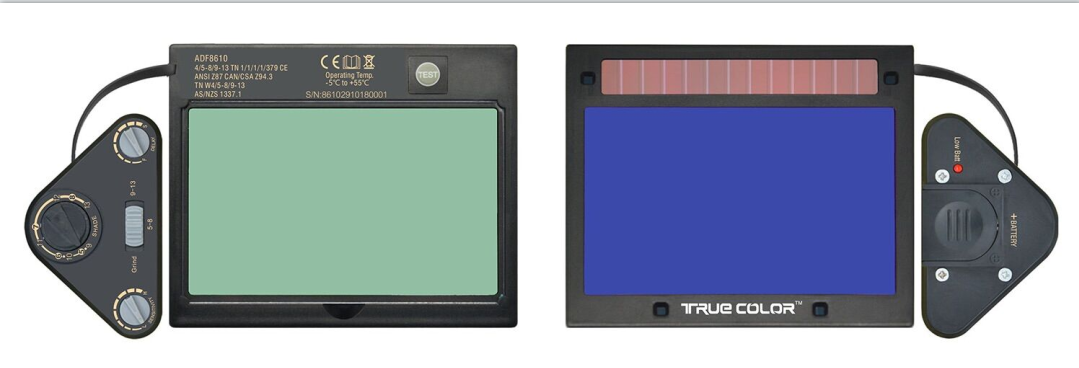
TIG welding produces a highly focused arc that can be very bright even at low amperage. Welders performing TIG at less than 10 amps should ensure their helmet can achieve a low enough shade (as low as DIN 5 or 8 in some cases) and has a high-quality sensor system to react at low light levels. Not all helmets are equally sensitive; premium models are better suited for low-amp TIG. Forexample the optical class 1/1/1/1 ADF.
The Role of Optical Class
Beyond shade number, optical clarity is another crucial factor. The EN379 standard uses a four-number rating (e.g., 1/1/1/1) to indicate clarity, diffusion, homogeneity, and angular dependence. A perfect score of 1/1/1/1 means:
- No visible distortion
- Uniform shade across the lens
- Excellent vision from any angle
Higher clarity reduces eye strain and helps welders work more accurately and comfortably.
Real-World Application: Why Correct Shade Matters
Consider two welders performing the same high-amperage MIG weld. One uses a helmet with an appropriate Shade 12 lens, while the other uses a helmet stuck on Shade 9. The first welder maintains clear vision and experiences no discomfort. The second, however, is squinting, his eyes watering, and by the end of the day, suffers from headaches and “arc eye.” This scenario highlights not just comfort, but the critical safety role of correct shade selection.
Innovations in Welding Helmet Technology
Today’s premium welding helmets offer more than just variable shade. Leading models feature:
- Wide viewing areas for better peripheral vision
- Multiple arc sensors for reliable auto-darkening
- Lightweight, ergonomic designs for all-day comfort
- Solar and battery dual power for long-lasting use
- Easy-to-clean and replaceable filters and lenses
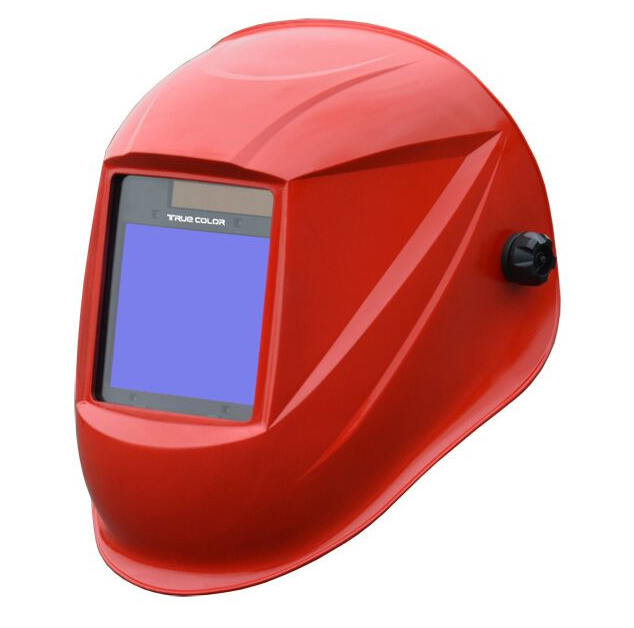
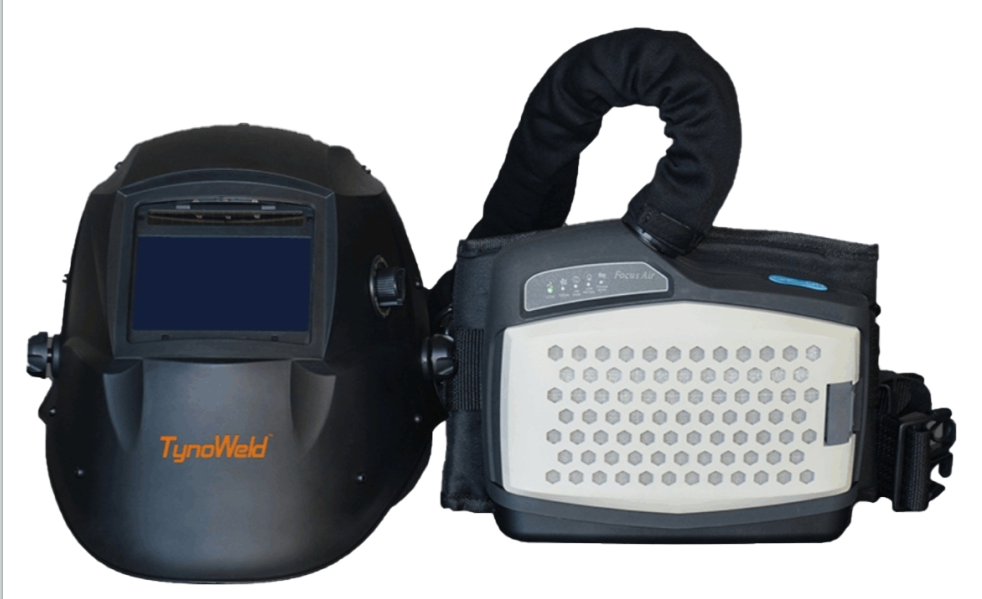
Some brands, backed by decades of industry experience and advanced manufacturing, are pushing the limits of helmet safety, providing both TH3P-level respiratory protection and top-tier optical performance.
Conclusion: Choosing the Right Shade for Safety and Performance
Selecting the correct welding lens shade is not just a matter of comfort—it’s a fundamental safety requirement. The right shade protects against immediate and long-term eye damage, while also enabling welders to produce high-quality work. With the variety of processes and amperages in modern welding, and the advancements in helmet technology, every welder can find a solution tailored to their needs.
For those seeking the best protection, it’s wise to choose helmets that comply with the latest international standards, offer variable shade ranges, and provide high optical clarity. The right helmet—especially those from reputable, experienced manufacturers—ensures that welders can work safely, efficiently, and comfortably, every single day.
In welding, your vision is your most valuable tool. Take care of it with the right lens shade—and let your skills shine.
Interested in the latest in welding safety? Explore products from industry leaders who combine cutting-edge optical technology with robust respiratory protection, ensuring welders everywhere can work with confidence and clarity.
Post time: Aug-19-2025