

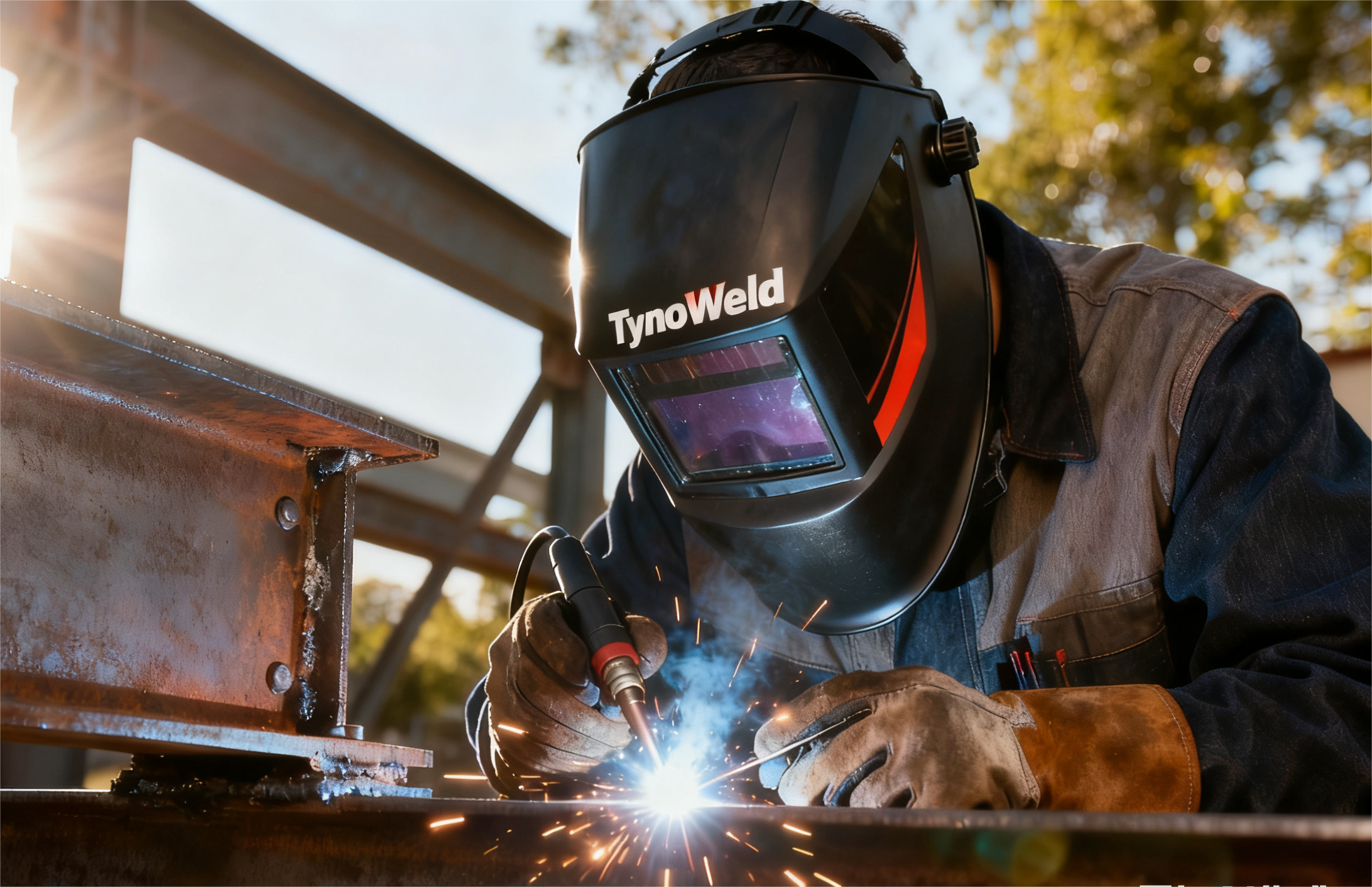
Getting started in welding can be daunting, especially with the many options for protective gear. Among all the safety equipment, choosing the right welding helmet—particularly a good auto darkening welding helmet—is one of the most important decisions a newcomer must make. At TynoWeld, we understand the challenges beginners face, and we’ve distilled years of experience into this guide to help new welders select a helmet that balances safety, comfort, and performance.
Why the Right Welding Helmet Matters
Before diving into models and specs, it’s worth emphasizing why your helmet choice is so critical:
-
Welding arcs emit intense UV/IR radiation and bright visible light. The wrong helmet or a malfunctioning lens can cause eye damage, including “welder’s flash” (photokeratitis).
-
A poor-fit or heavy helmet leads to fatigue, poor posture, and distraction during long welds.
-
For novices, a reliable auto darkening feature means you don’t have to flip the helmet up and down constantly, improving safety and workflow.
At TynoWeld, our line of auto darkening welding helmets has been designed with the beginner in mind—offering fast response time, stable performance, and ergonomic design.
What to Look for: Key Features for Beginners

When evaluating a welding helmet—especially your first one—pay special attention to the following:
1. Auto Darkening Speed & Reliability
A good auto darkening welding helmet should switch from light to dark in fractions of a millisecond (typically 0.1 ms to 1 ms). This protects your eyes instantly when the arc strikes. Also look for stable performance across multiple cycles.
2. Optical Clarity Grade (e.g. 1/1/1/1 or 1/1/1/2)
The clarity rating describes distortion, shade uniformity, etc. The ideal is 1/1/1/1 under the EN379 standard. TynoWeld offers high optical clarity in many of its models.
3. Shade Range & Modes
Look for a wide shade range (e.g., DIN 9–13 or broader), plus modes such as Weld, Cut, and Grind. These allow you to adapt to different processes.
Also check that sensitivity and delay settings are adjustable, so you can dial in response appropriate to your arc and environment.
4. Sensor Coverage & Positioning
A helmet with multiple arc sensors helps avoid “dead zones.” The sensors should face the weld area without obstruction.
5. Weight, Balance & Headgear Comfort
Beginners often weld for extended periods. A lightweight shell, well-balanced design, and adjustable, padded headgear reduce neck strain and improve stability.
6. Lens Replacement & Spare Parts Availability
You’ll eventually scratch or degrade lenses—make sure spare front/inner cover lenses, batteries, and headgear components are easy to obtain.
7. Certifications & Safety Standards
Ensure the helmet meets relevant standards—ANSI Z87.1, CE EN379, etc. TynoWeld helmets hold CE certification.
Recommended TynoWeld Models for Beginners
Here are a few TynoWeld welding helmet models that are particularly well-suited for newcomers:
-
TN01 – Entry-level but fully featured with auto darkening, good clarity, and adjustable features.
-
TN08 / TN12 / TN15 / TN16 – These mid-tier models step up optics, shell materials, and comfort.
-
TN350 / TN360 – Advanced models offering premium lens technology, larger viewing areas, and lighter shells for extended use.
Each of these helmets offers a blend of performance, ease of use, and reliability for someone just starting out.
Common Problems & Solutions (Inspired by TynoWeld’s Troubleshooting Guide)

Beginners may face issues with their auto darkening helmets. Below is an adapted and condensed version of the troubleshooting and maintenance approach TynoWeld recommends.
| Problem | Common Causes | Suggested Remedies |
|---|---|---|
| Helmet does not darken | Dead or misaligned battery, dirty or blocked sensors, wrong mode selected | Replace or recharge battery; clean sensor surfaces and remove obstructions; switch to Weld mode |
| Helmet stays dark | Sensor stuck, sensitivity too high, internal circuit issue | Clean sensors, reduce sensitivity, check for damage, consult manufacturer |
| Flickering / intermittent darkening | Low battery, poor contact, misaligned sensors | Replace battery, clean contacts, realign sensors |
| Poor visibility / distortion | Scratched lenses, fogging or moisture, ambient light interference | Replace scratched lenses; use anti-fog measures; shield sensors from bright ambient light |
| Discomfort or slipping | Poor headgear adjustment, imbalance, weak knobs | Adjust straps and padding, check balance, tighten adjustment knobs, add padding if needed |
Preventive Maintenance Tips
-
Wipe sensors and lenses after each use with a soft microfiber cloth.
-
Store the helmet in a dry place away from extreme heat or sunlight.
-
Replace batteries proactively before they fail mid-weld.
-
Conduct a quick function test (expose sensors to light) before each welding session.
-
Keep spare lenses, batteries, and headgear parts ready in your toolbox.
Buying Tips for New Welders
-
Start with “good enough,” not the cheapest — You want reliability over gimmicks.
-
Test before you weld — Expose the auto darkening filter to strong light to check responsiveness.
-
Consider package deals — Some helmets come bundled with spare lenses, sweatbands, or covers.
-
Use what comes with the helmet first — Don’t swap in off-brand optical parts that may degrade clarity.
-
Wait for sales or group orders — As a buyer at TynoWeld, we occasionally run promotions, especially for newcomers.
Final Thoughts
If you’re just stepping into the world of welding, choosing your first auto darkening welding helmet is a milestone. The right helmet protects your eyes, enhances your confidence, and allows you to focus fully on learning technique.
At TynoWeld, our mission is to support welders from day one. Our helmets combine instant arc detection, clear optics, ergonomic comfort, and long-term reliability. Whether you start with a TN01 or go straight for TN360, you’ll know you’re backed by a brand committed to quality, safety, and innovation.
Ready to take your first step? Contact us or explore our product pages to find the perfect welding helmet for your journey.
Post time: Oct-02-2025