
Insights into the Auto-Darkening Process of Welding Helmets
At TynoWeld, we pride ourselves on designing and manufacturing high-quality auto-darkening welding helmets that deliver rapid protection, optimum clarity, and long-term durability. Understanding how the auto-darkening process works is essential not only for welding professionals who demand safety but also for those seeking to select, maintain, and get the most from their welding PPE.
Key Takeaways
-
“Auto-darkening” welding helmets use sensors that detect intense light (an arc) and trigger a filter to switch from a light or standby state to a darkened shade in milliseconds.
-
Critical factors include sensor responsiveness, lens technology, power supply (battery/solar/combination), delay & sensitivity settings, and optical clarity.
-
Failures in any component (sensor, power, electronics) result in safety risks—eye strain, flash burns, reduced precision.
-
Regular maintenance, correct settings, and choosing a high-spec helmet (such as those from TynoWeld) reduce failures and enhance performance.
How Auto-Darkening Really Works
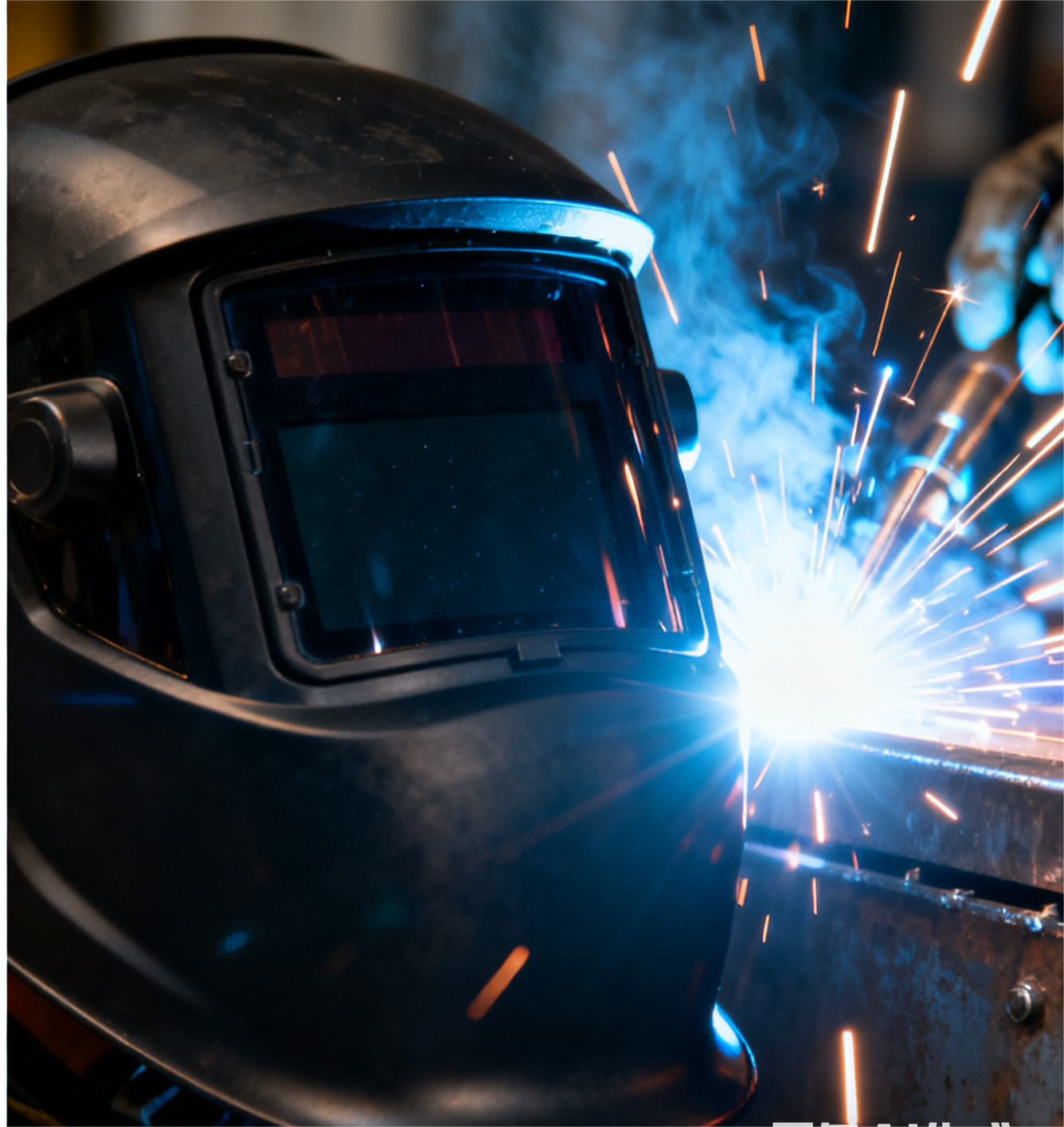
Auto-darkening welding helmets (ADWH) consist of several interconnected parts:
-
Sensors / Photocells that detect the electromagnetic radiation (visible, UV, IR) emitted by the welding arc. These are usually located on the front of the helmet.
-
Auto-Darkening Filter (ADF): a specialized lens that, in its resting state, allows clear or lightly shaded view; once triggered, it instantaneously changes to a darker shade to protect the eyes. The speed of transition (switching time) is critical.
-
Power Supply: ADWHs may use replaceable batteries, built-in rechargeable batteries, or solar assist (light from arc + ambient light) to maintain power.
-
Control settings: Including sensitivity, determining how easily the sensors detect the arc; delay, determining how long the filter stays in dark mode after the arc ceases; shade level, which must be appropriate to the welding process and current.
-
Optical Clarity & Lens Construction: Layers that block harmful UV/IR, coatings that resist scratches, filters that ensure color rendering is accurate, and materials that minimize distortion.
Common Challenges & Solutions in the Auto-Darkening Process
Drawing from customer feedback and in-house testing, here are some issues often seen, along with their causes and remedies:
| Problem | Possible Causes | Fixes / Preventive Measures |
|---|---|---|
| Helmet fails to darken when welding begins | Dead or improperly installed batteries; sensors dirty, obstructed, or misaligned; sensitivity set too low; worn-out ADF | Always check battery health; clean sensors; ensure they’re facing the weld; increase sensitivity; replace the ADF if switching time slows or protective layers degrade. |
| Helmet stays dark even without an arc | Sensors over-sensitive; ambient light triggering the system; delay set too long; sensor malfunction | Lower sensitivity; shield sensors from bright light; reduce delay time; check for sensor damage; if persistent, have the helmet inspected by manufacturer. |
| Flickering or intermittent darkening | Weak power supply; loose or corroded battery contacts; partial obstruction of sensor; very low arc current not sufficient to trigger sensor under current settings | Use fresh batteries; clean battery terminals; clean sensors; adjust sensitivity upward for low current welding. |
| Poor visibility or distorted view | Scratches, cracks, or clouding on front cover lens or inside lens; low optical class; improper shade setting; fogging or moisture buildup | Replace damaged lenses; choose a helmet with high optical class ratings; use correct shade for the welding type; apply anti-fog treatments; ensure ventilation; store the helmet properly. |
Technical & Operational Parameters to Watch
-
Switching Time: The time it takes the lens to go from clear to dark (and back). Faster switching reduces exposure of eyes to harmful intense light.
-
Shade Levels: For different welding methods (MIG, TIG, Stick), different shade levels are required. Using insufficient shade lets harmful UV/IR through; using too dark impairs visibility.
-
Sensitivity & Delay Settings: Good auto-darkening helmets allow adjusting these. Sensitivity ensures weak arcs are detected; delay ensures that the lens doesn’t snap back too fast (letting residual light through) or stay dark too long (impairing visibility).
-
Optical Class: Standards like EN 379 define optical clarity, distortion, shade uniformity, etc. High optical class (e.g. 1/1/1/1) means minimal distortion.
-
Power Management: Solar assist helps extend battery life. Built-in rechargeable batteries need proper charging practice. Replaceable batteries must be correct type and quality.
What TynoWeld Helmets Offer
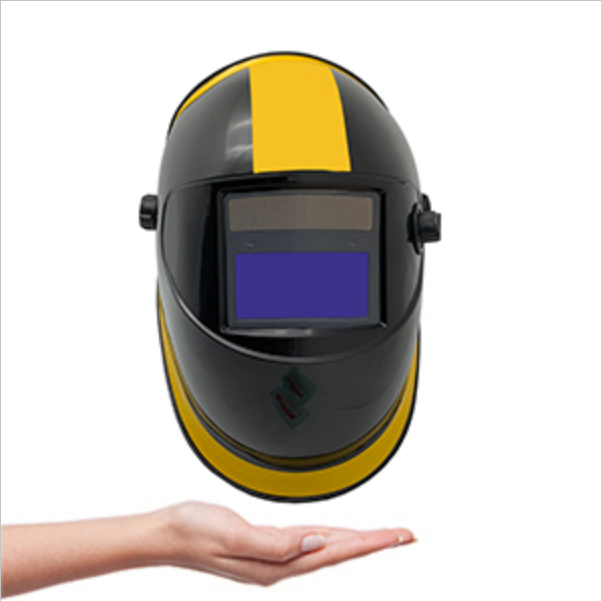
At TynoWeld, our auto-darkening welding helmets are engineered to address the above technical parameters:
-
High speed ADFs with switching times that meet or exceed standard safety thresholds.
-
Premium optical clarity with advanced filters (True-Color / ClearLight etc.) to reduce eye strain and color distortion.
-
Reliable dual-power systems (solar + backup battery) or high-quality batteries for consistent performance.
-
Adjustable settings (sensitivity, delay, shade, mode) tailored to different welding processes (TIG, MIG, stick, plasma, etc.).
-
Headgear designed for comfort: balanced weight, good padding, secure fit to prevent slipping, fatigue.
Best Practices: Usage, Maintenance, and Safety

To ensure that your auto-darkening welding helmet continues to perform reliably and safely, here are best practices:
-
Daily Checks: Before each job, inspect the helmet shell, lenses (inner and outer), sensors, and battery status. Test exposure to bright light / arc to verify darkening.
-
Cleaning Routine: After every session, clean sensors & lens covers with a soft cloth; avoid abrasive or harsh chemicals that can degrade filters or coatings.
-
Proper Settings per Task: Adjust shade level, sensitivity, and delay according to welding current, environment (ambient light), task (welding vs. grinding), and machine type.
-
Storage Conditions: Keep the helmet out of direct sunlight, moisture, extreme heat; store in a dry place; avoid dropping or impact damage.
-
Replacement Schedule: Replace front cover lenses or inner plates when scratched or hazed; replace batteries as recommended; replace helmet if shell cracks or electronics consistently fail.
Conclusion
Understanding the auto-darkening process is vital: it’s not enough just to own a helmet—one must know how it works, where it can go wrong, and how to maintain it. At TynoWeld, we strive to produce auto-darkening welding helmets that minimize risk, maximize visibility and comfort, and last through the toughest jobs. By combining advanced lens technologies, reliable power systems, precise sensors, and adjustable settings, we help welders stay safe, productive, and confident.
Choose smart. Maintain diligently. Trust gear that keeps up.
Post time: Sep-11-2025